
How to Tell if Your Loved One Is Sundowning: The Signs Most Families Miss

If your loved one seems to become like a different person every evening, you're not imagining it.
Perhaps they're calm all day, then around dinner they become restless, suspicious, angry, or convinced they need to "go home." Maybe they start pacing the house, following you from room to room, or insisting that strangers are outside. By bedtime, everyone is exhausted.
Families often assume this means the dementia is suddenly getting much worse.
It might not.
Your loved one may be experiencing sundowning, one of the most common and misunderstood symptoms of dementia.
Knowing how to recognize sundowning can help you respond in ways that reduce stress instead of accidentally making things worse.
What Is Sundowning?
Sundowning (sometimes called sundown syndrome) describes a pattern in which dementia symptoms consistently become worse during the late afternoon, evening, or nighttime.
The exact cause isn't fully understood, but researchers believe it is related to changes in the brain that affect the body's internal clock, combined with fatigue, overstimulation, hunger, dehydration, and changes in lighting.
Importantly, sundowning is a pattern, not a single difficult evening.
Everyone has bad days. Sundowning happens when behaviors reliably emerge around the same time of day.
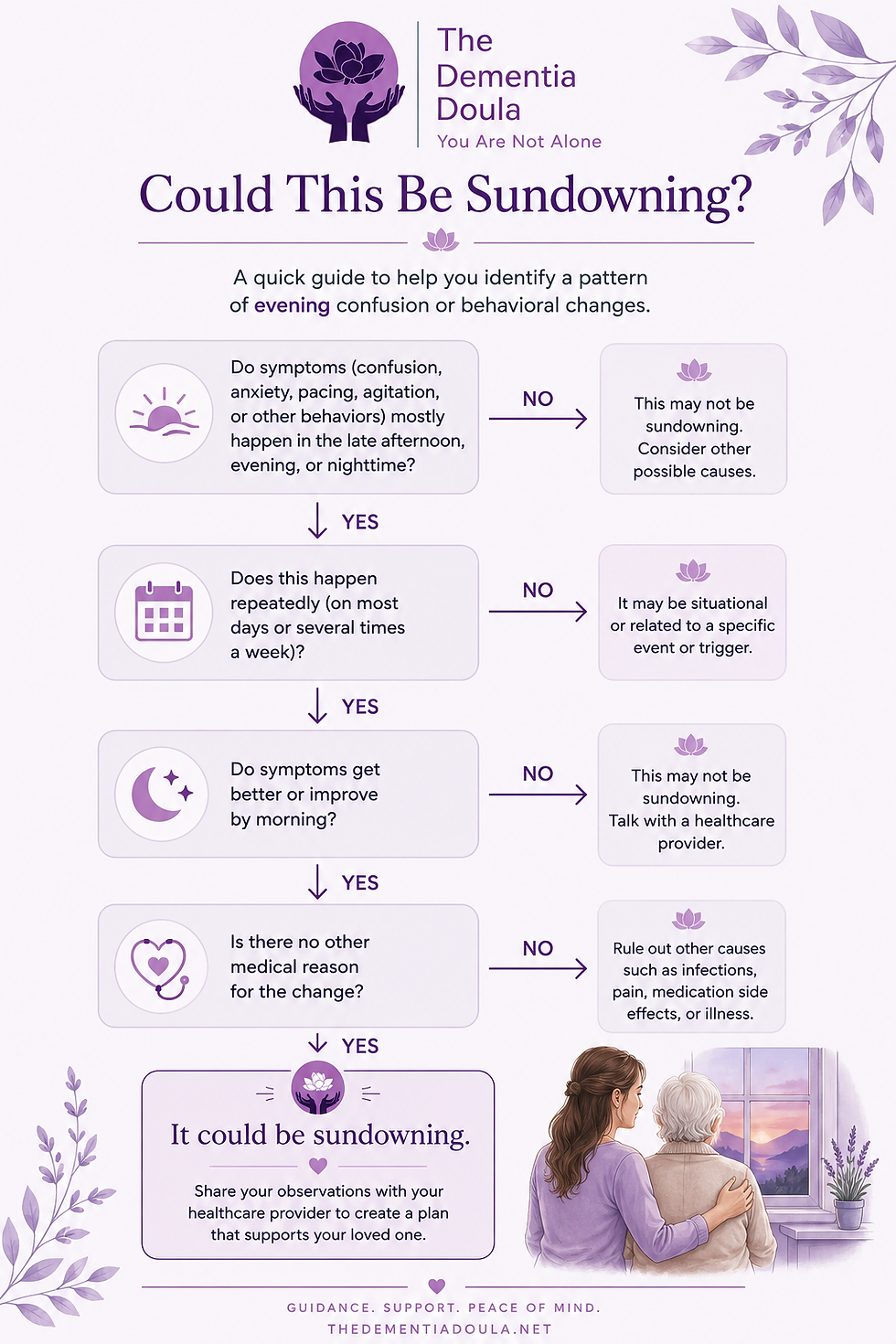
Signs Your Loved One May Be Sundowning
If you're wondering whether your loved one's evening behaviors fit the pattern of sundowning, use this quick guide. While it isn't a medical diagnosis, it can help you recognize common patterns and know when it's time to speak with a healthcare provider.

Every person experiences dementia differently, but families often notice the same collection of symptoms.
Increased confusion
Someone who seemed relatively clear earlier in the day suddenly struggles to recognize familiar people or understand where they are.
They may repeatedly ask what time it is, believe they're in the wrong house, or insist they need to leave.
Restlessness or pacing
Many people become physically unable to settle.
They may wander through the house, repeatedly get up from their chair, open and close doors, or feel an urgent need to "go somewhere."
Agitation and irritability
Small frustrations suddenly become major conflicts.
A simple request to brush teeth or sit down for dinner may lead to yelling, arguing, or refusing care.
Anxiety that seems to come out of nowhere
Your loved one may suddenly become fearful.
They may believe someone is breaking into the house, insist children are outside, or worry that family members are missing.
Even though these fears aren't based in reality, they feel completely real to the person experiencing them.
Increased hallucinations or delusions
For people who already experience hallucinations or false beliefs, evenings often make them more intense.
Someone may see people in the room, hear voices, or become convinced family members are stealing from them.
Difficulty sleeping
Many families think the problem begins at bedtime.
In reality, the behaviors often begin hours earlier and continue into the night.
Your loved one may resist going to bed, wake repeatedly, or stay awake wandering.
What Sundowning Does Not Look Like
Not every evening behavior is sundowning.
If confusion suddenly appears for the first time, becomes dramatically worse overnight, or continues all day instead of following an evening pattern, something else could be happening.
Possible causes include:
Urinary tract infections
Pain
Medication side effects
Constipation
Low blood sugar
Other medical illnesses
A sudden change in behavior should always be discussed with your healthcare provider.
Why Evenings Are So Difficult
One of the hardest parts for caregivers is that they're exhausted at exactly the same time their loved one becomes most difficult.
After working, managing appointments, cooking dinner, and handling countless caregiving tasks, families often have the least patience during the hours when dementia symptoms are at their worst.
This creates a painful cycle.
Your loved one becomes more confused.
You become more frustrated.
They sense your stress and become even more distressed.
Before long, every evening feels like a battle neither of you wanted.
Understanding that this pattern has a neurological basis doesn't make it easy, but it often helps caregivers stop blaming themselves.
How to Keep Track of Sundowning
One of the simplest ways to identify sundowning is to keep a short journal for a week or two.
Write down:
What time behaviors begin
What happened beforehand
What they ate and drank
Whether they napped
How much activity they had that day
What seemed to make things better or worse
Patterns often emerge surprisingly quickly.
Sometimes families discover that agitation begins every day around 5:00 p.m. Sometimes they notice it only happens after overstimulating outings or poor sleep.
These observations can become invaluable when speaking with physicians or developing a care plan.

Struggling With Dementia Sundowning?
Sundowning doesn't just affect the person living with dementia. It changes the rhythm of an entire household. Many caregivers find themselves dreading late afternoon because they know confusion, pacing, accusations, or agitation may be just hours away. Over time, it's easy to begin questioning your instincts or wondering if you're a good caregiver or just making things worse.
You don't have to navigate that uncertainty alone.

During a one-on-one caregiver coaching session, we'll uncover what's driving your loved one's behaviors, develop practical communication strategies tailored to your family, and help you respond with greater confidence instead of second-guessing yourself.
Virtual dementia caregiver coaching available nationwide.
Frequently Asked Questions About Sundowning
At what stage of dementia does sundowning start?
Sundowning usually occur during the middle stages of dementia, although some people experience it earlier or later. It is most common in Alzheimer's disease but can occur with many types of dementia.
Does sundowning happen every day?
Not always, but many families notice a predictable pattern where symptoms worsen during the late afternoon or evening on most days.
Can sundowning get better?
Yes. While it may not disappear completely, identifying triggers, adjusting routines, improving communication, and creating a calmer evening environment can significantly reduce symptoms for many people.
Is sundowning a sign that dementia is progressing?
Not necessarily. Sundowning can become more common as dementia progresses, but even people with relatively stable symptoms may experience evening behavioral changes.


Comments